

Geriatric Dentistry in Gajularamaram
- 14+Years of experience
- 50,000+Patients treated
- 4.9Google rating
- 30–45 minutes per visit
- planned around your health; check-ups every 3–6 months
- Mon – Sun: 9:30 AM – 9:00 PM

What Is Geriatric Dentistry?
Geriatric dentistry is dental care for older patients, planned around their health as much as their teeth. The treatments themselves are the familiar ones, such as fillings, gum care, extractions, dentures and implants. What changes in later life is everything around them: the medicines a person takes, the conditions they live with, how dry the mouth has become, and how long a visit can comfortably last.
Teeth change with age in predictable ways. Gums draw back and leave the roots exposed, and root surfaces decay faster than the enamel above them. Many common medicines reduce saliva, which is the mouth’s own protection. Old fillings and crowns reach the end of their life, and dentures that once fitted well drift loose as the ridge underneath them changes. None of this means losing teeth is inevitable. It means the care has to look for different problems, earlier, because in later life they often cause no pain until they are advanced.
The aim is simple: to eat comfortably, to speak and smile with confidence, and to keep the mouth free of pain and infection, with as few teeth lost as possible. That starts with an unhurried conversation about health and medicines, and it works best with a family member who knows the daily routine at home.
Keeping What You Have, Replacing What Is Lost
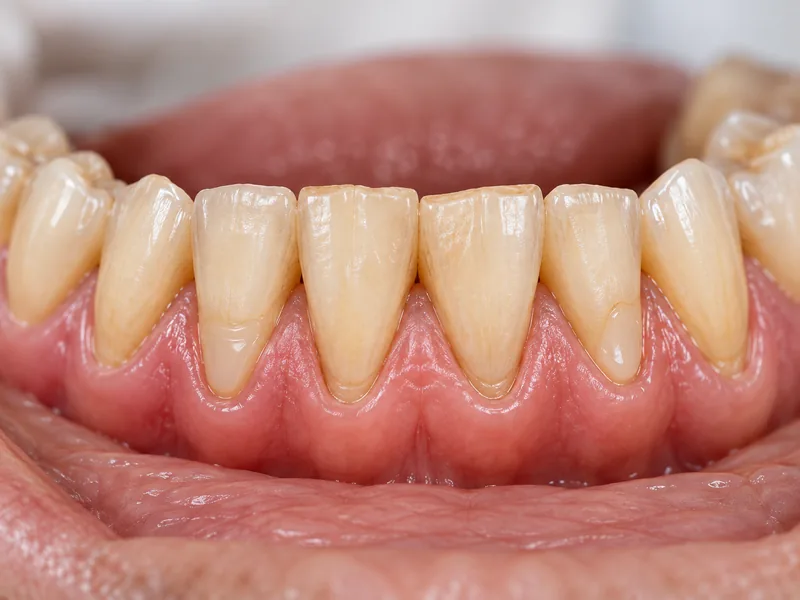
Keeping Your Own Teeth
Most older patients still have teeth worth keeping, and every one kept makes eating easier and any denture steadier. That means catching decay at the roots early, treating the gums, and repairing worn or broken teeth before they split. It is quieter work than replacement, and it is where most of the value is.
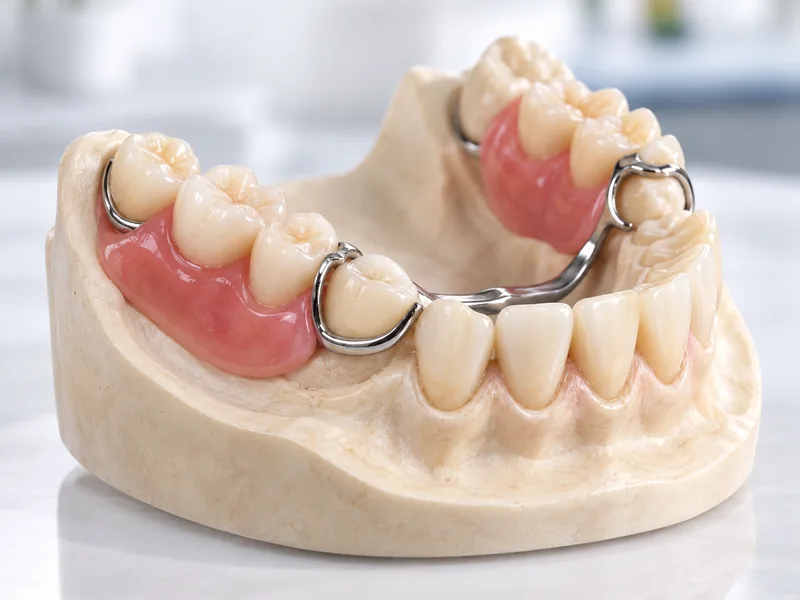
Replacing What Is Lost
Where teeth are gone or cannot be saved, the aim is chewing that works and a mouth that is comfortable: a new or relined denture, a partial that clips to the teeth still standing, and for some people implants that hold a denture still. Which one depends on health and on the bone left, far more than on age.
Signs It Is Time for a Visit
Problems in later life tend to arrive quietly, without the sharp pain that sends younger people to a dentist. These are the ones worth acting on.
- A mouth that is always dryVery often a side effect of medicines, and a real cause of decay, sore gums and loose dentures.
- Sensitive or darkening rootsGums that have drawn back leave the root exposed, and root surfaces decay faster than enamel.
- Gums that bleed or teeth that moveGum disease loosens teeth slowly and without pain, and diabetes makes it harder to control.

- A denture that hurts or has gone looseThe ridge under a denture keeps changing, so an old one drifts out of fit and starts to rub.
- Chewing has become hard workA diet that has narrowed to soft food because chewing stopped working, which affects nutrition.
- Worn, chipped or broken teethDecades of chewing thin the enamel, and old fillings crack the tooth around them.
Options
What Geriatric Dental Care Covers
It is not one treatment but the usual treatments, planned around a person's health, medicines and comfort. These are the four it comes back to most.
 1
1Root decay and repairs
Decay at the neck of the tooth, where the gum has shrunk back, repaired with tooth-coloured fillings. Some of these materials release fluoride, which helps a dry mouth resist the next cavity.
 2
2Gum care
Deep cleaning below the gum line and regular maintenance visits, so loosening teeth stay in.
 3
3Dentures, relines and repairs
New complete or partial dentures, and just as often the old ones refitted, repaired or added to.
 4
4Implant-held teeth
Two implants can hold a lower denture still, and more can carry fixed teeth. Age alone rules nobody out; health, medicines and bone decide it, and it is assessed honestly.
How Treatment Is Planned for Older Patients
Starting with your health, not your teeth
The first conversation is about medicines and conditions: blood thinners, diabetes, blood pressure, heart problems, and bone medicines for osteoporosis, all of which change how a tooth is treated or taken out. Bring the list of medicines, or the strips themselves, and any recent reports. Where a decision depends on your physician, such as pausing a blood thinner, that is agreed with them first and never guessed at.

A plan that fits the person
The plan is laid out in order of what matters most: pain and infection first, then chewing, then everything else. Treatment can be split into shorter visits where a long one would be tiring, and it is explained to you and to the family member with you, in plain language, so everyone at home knows what is happening and why.
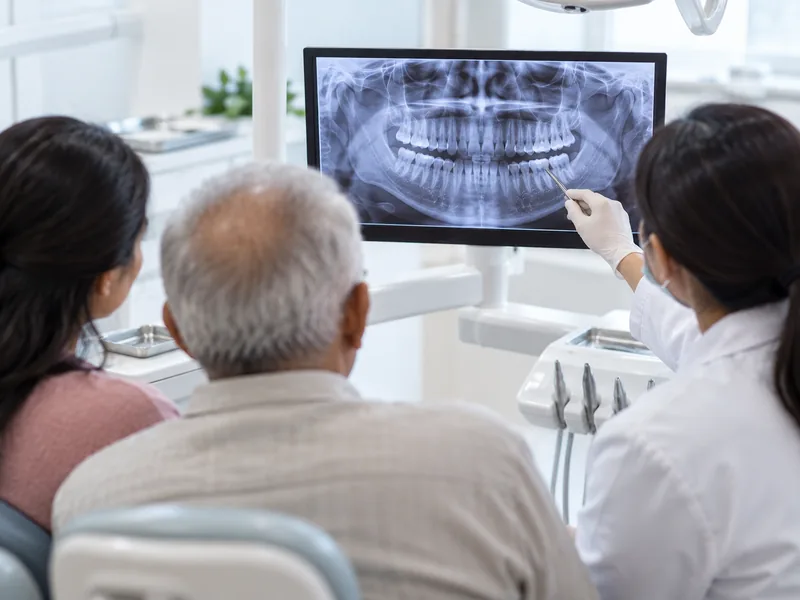
Keeping it that way
Check-ups every three to six months, a professional clean, and fluoride where the mouth is dry. Most problems in later life are cheaper and gentler to deal with when they are small, and a short regular visit is what keeps them small. Where brushing has become difficult, we show whoever helps at home how to do it well.
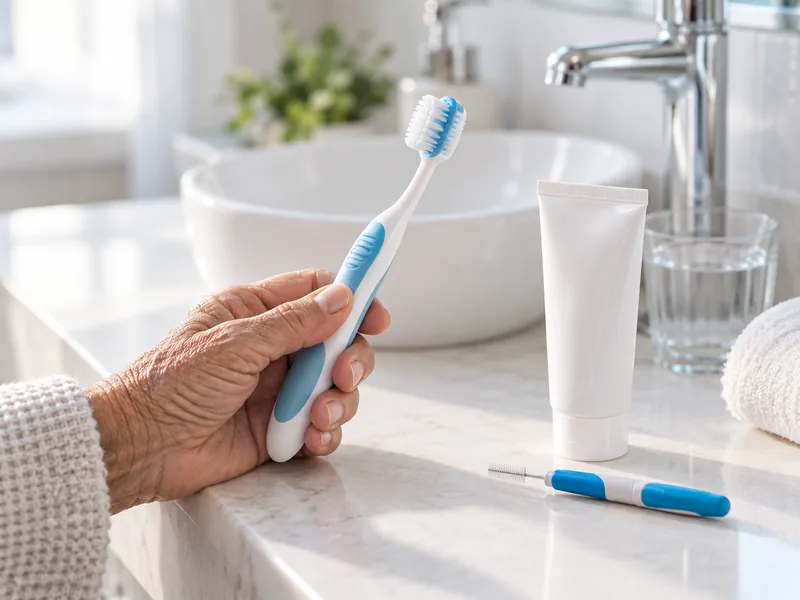
Recovery
Looking After Teeth in Later Life
Small habits carry most of the weight. None of these need anything special, and together they prevent most of what brings older patients in.
- 1
Keep a list of your medicines
Written down, with the doses, and bring it to every visit. It changes more often than people think, and it matters to how you are treated.
- 2
Sip water through the day
A dry mouth is the biggest single cause of decay in later life. Water, not sweet drinks, and sugar-free if you need something to suck.
- 3
Fluoride toothpaste, twice a day
Spit, do not rinse, so the fluoride stays on the teeth. It is the cheapest protection there is for exposed roots.
- 4
Make brushing easier
A soft brush with a thicker handle, or an electric brush, helps stiff or shaky hands reach every tooth properly.
- 5
Clean between the teeth
Small interdental brushes are easier to hold than floss, and they clean around bridges and the teeth a partial denture clips to.
- 6
Dentures out at night
Cleaned over a basin of water with a soft brush and soap, not toothpaste, and kept in water so they do not dry out and warp.
- 7
Do not wait for pain
Decay at the roots and gum disease rarely hurt until they are advanced. A check every few months finds them first.
- 8
Get a lasting sore checked
An ulcer, patch or lump in the mouth that has not healed in two weeks should be looked at, especially under a denture.
A common question
Keeping Some Teeth vs Taking Them All Out
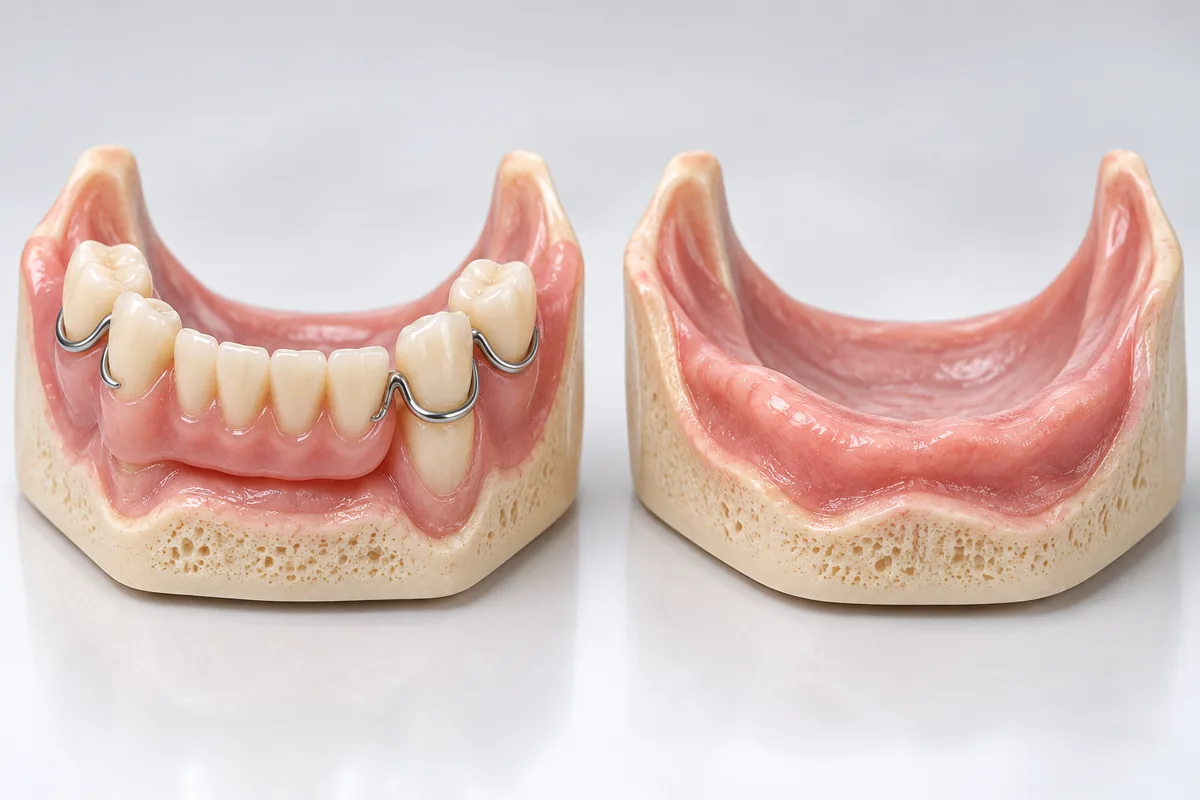
Older patients, and often their families, sometimes ask to have all the remaining teeth taken out and be done with it. The reasoning is understandable: the teeth that are left keep causing trouble, and a full denture sounds like the end of it. It is worth pausing before that decision, because it cannot be undone.
A few healthy teeth are worth more than they look. They hold a partial denture far more firmly than gum alone ever holds a complete one, and the bone around a tooth stays while it is there — once teeth are gone, the ridge underneath slowly shrinks, which is exactly why lower complete dentures are hard to keep still. Keeping even two or three good teeth in the lower jaw often makes the difference between a denture that works and one that lifts every time you speak.
That does not mean saving everything. A tooth that keeps getting infected, is badly loose, or cannot be restored is often better out, and leaving it in only delays the problem. The honest answer is tooth by tooth: which ones are worth keeping, which are not, and what the mouth will be like afterwards either way.
What Happens at Your First Consultation
- 1Health reviewYour medicines, conditions and recent reports, before anything else.
- 2ExaminationThe teeth, gums, any denture you wear, and the soft tissues of the mouth.
- 3X-rayDecay at the roots, bone around the teeth, and anything buried under the gum.
- 4PlanWhat matters first, how many visits, and what each will involve.
- 5FamilyBring a family member if it helps; the plan is explained to both of you.
Why us
Why Choose Us for Geriatric Dental Care
- Each step is explained in plain language, to you and to the family member with you.
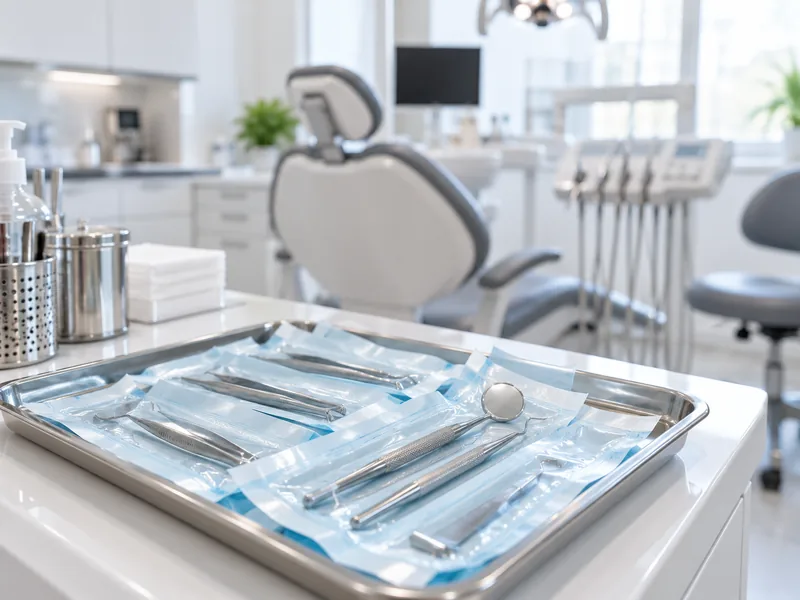
- Instruments sterilised and sealed for every patient, under a strict protocol.
- Open every day, 9:30 AM to 9 PM, at two branches in Gajularamaram: Mallareddy Nagar and Ushodaya Colony.
Tooth Pain & Repair
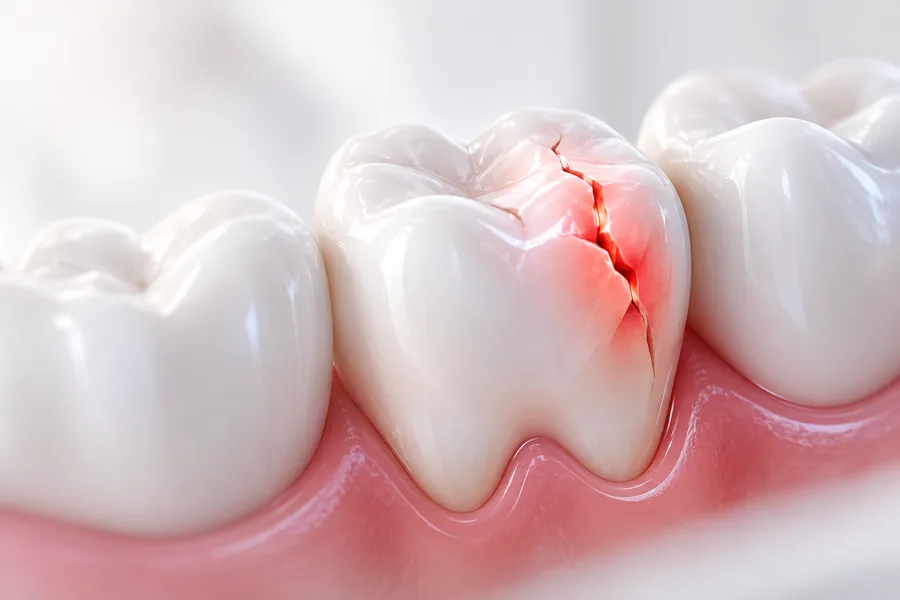
Relief from toothache and repair for decayed, cracked or broken teeth, from fillings and root canals to crowns.
- Root Canal Treatment
- Tooth Sensitivity Treatment
- Cavity Treatment
- Tooth Fillings
- Dental Crowns & Caps
- Wisdom Tooth Removal
- Emergency Dental Care
 learn more
Missing Teeth
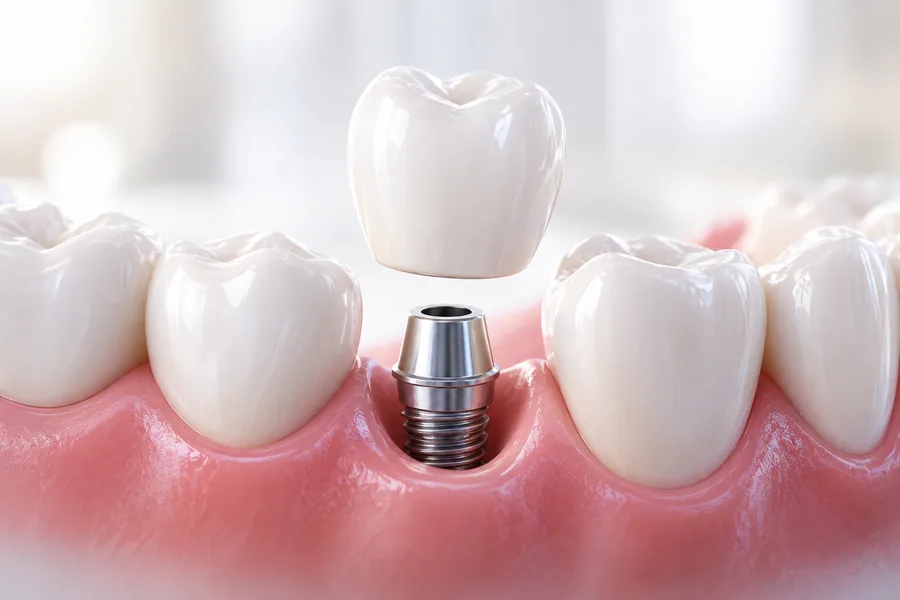
Implants, bridges and dentures to replace missing teeth, with each option explained honestly.
 learn more
Straightening
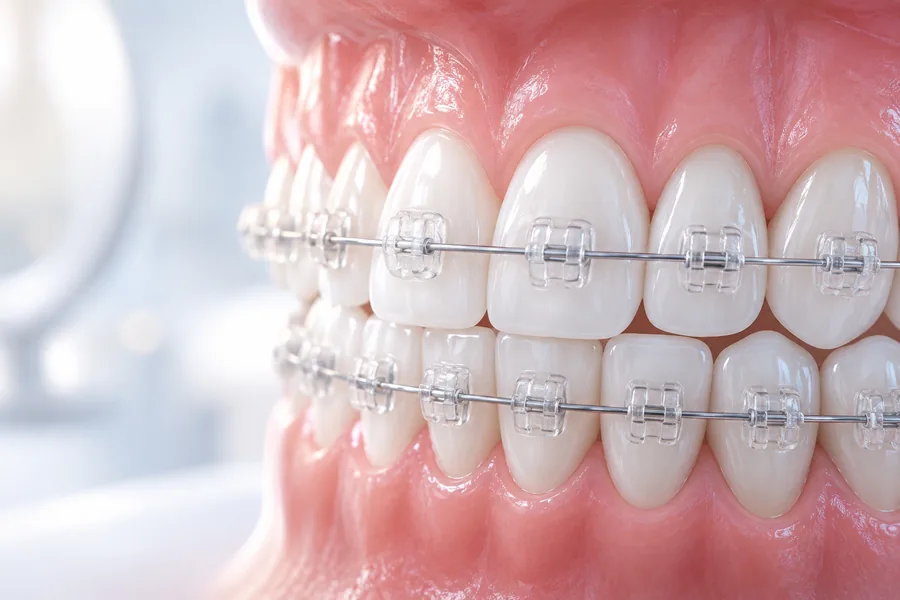
Braces and Illusion clear aligners for crooked or gapped teeth, for children and adults.
 learn more
Cosmetic
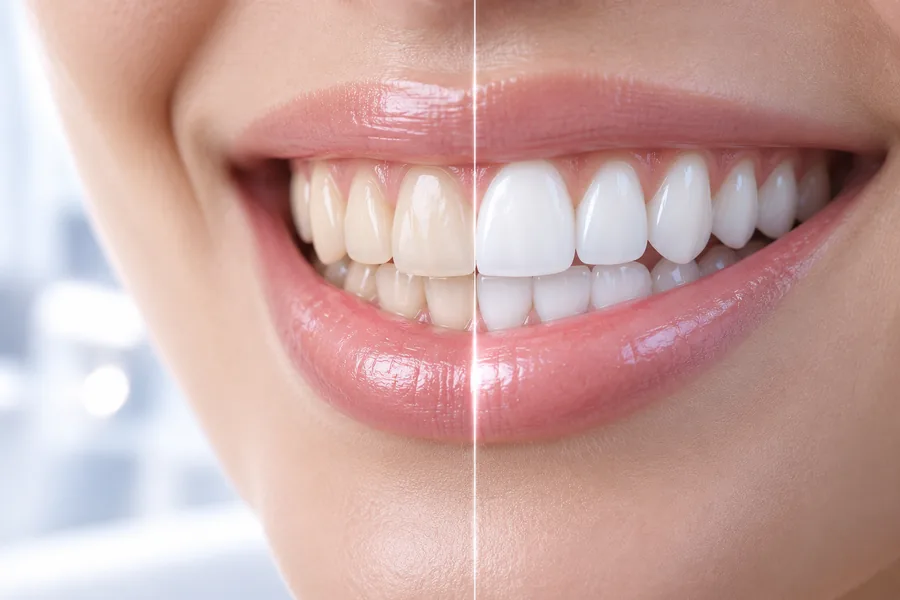
Whitening, veneers, bonding and smile makeovers to improve the colour and shape of your smile, led by our cosmetic dentist.
 learn more
Gums & Cleaning
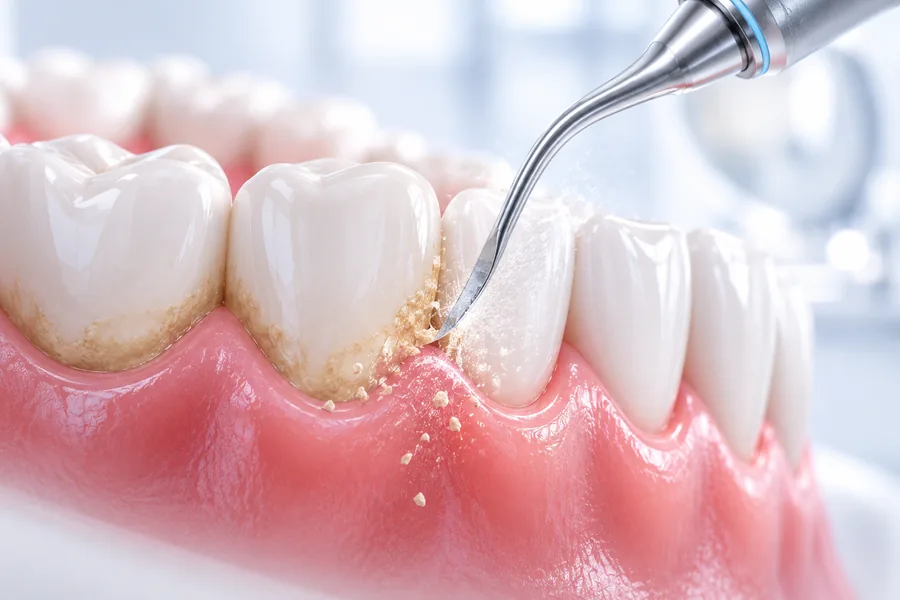
Cleaning, gum treatment and laser care for bleeding gums and bad breath.
 learn more
Kids & Family
Gentle check-ups, fluoride and sealants for children with our pedodontist, routine check-ups for the whole family, and care for older patients.






Verified Google Reviews
Harsha Vardhini
2026 · Google
I highly recommend Dr. Roja! She is incredibly kind, patient, and caring. I’ve had a root canal and multiple fillings done by her, and every procedure was completely painless. She explains everything clearly, makes you feel comfortable, and ensures you’re at ease throughout the treatment. Her gentle approach and professionalism make every visit a great experience. If you’re looking for a skilled dentist who truly cares about her patients, Dr. Roja is an excellent choice!
akk reddy
2026 · Google
I had a great experience with Dr. Roja madam. She is a very good doctor and extremely patient-friendly. I was suffering from a tooth cavity, and she suggested a root canal treatment. After starting the treatment, my tooth pain completely disappeared. The cap fitting was also very comfortable and flexible. Overall, I am very satisfied with the treatment and care provided. Thank you so much
Mamidisetti Siva
2026 · Google
I had a very good experience at this dental clinic. The treatment was excellent, and the staff were very friendly and supportive. Even after the treatment, they took great care by calling me, checking on my recovery, and asking me to come for follow-up visits. I really appreciate their concern and professionalism. Highly recommended.
BHARATH GUNDEBOINA
2026 · Google
Had a great experience with teeth replacement treatment. Dr. Roja mom explained everything clearly and the procedure was smooth and painless. The results look very natural and I’m extremely happy with my new smile. Highly recommended..thank you….
venkannababuk venki
2026 · Google
Madam provides very good dental treatment. She explains everything clearly and patiently whenever I have any doubts. I am very satisfied with the treatment and the way she cares for patients. Thank you, SR Dental.
Near you
Geriatric Dentistry Near You in Gajularamaram
If you are looking for a dentist for a parent or grandparent in Gajularamaram, the first visit is mostly a conversation: their health, their medicines, and what is bothering them. Bring the list of medicines and any denture they wear, even an old one they no longer use.
Both branches are open every day until 9 PM, including Sundays, so a family member who works can come along. If stairs or getting into the chair are a concern, call before the visit and tell us, so the appointment is arranged around it.
77020 95262Gajularamaram
Contact
Reach out to schedule your next dental visit
Whether you have a question, need expert advice, or are ready to book your next appointment, our team is here to help.
Reach out to us on
- Phone Number 77020 95262
- Email address srdentalcare48@gmail.com
- Main Branch Mallareddy Nagar: Plot no. 13/P, Above First Care Pharmacy, Mallareddy Nagar Colony, Gajularamaram, Quthbullapur, Hyderabad, Telangana, 500117 (opens Google Maps in a new tab)
- Second Branch Ushodaya Colony: Hospital Phase 2, Plot No:100/N, behind UMCC Road, Chandragiri Nagar, Ushodaya Colony, Indira Nagar, Gajularamaram, Hyderabad, Telangana, 500055 (opens Google Maps in a new tab)
Working Hours
- Mon – Sun:
- 9:30 AM – 9:00 PM
Our Branches
Find a dental clinic near you
Primary Clinic
Mallareddy Nagar
Plot no. 13/P, Above First Care Pharmacy, Mallareddy Nagar Colony, Gajularamaram, Quthbullapur, Hyderabad, Telangana, 500117
77020 95262Open in MapsUshodaya Colony
Hospital Phase 2, Plot No:100/N, behind UMCC Road, Chandragiri Nagar, Ushodaya Colony, Indira Nagar, Gajularamaram, Hyderabad, Telangana, 500055
77020 95262Open in Maps
FAQs
Frequently asked questions about geriatric dentistry
Still have a dental question?
Send us a message and our dental team will help.
Is there an age limit for dental treatment or implants?
No. What decides a treatment is health, medicines and the bone available, not the number of years. Plenty of people in their seventies and eighties have fillings, root canals and implants without trouble, and some younger patients are not suitable for implants because of their health. Age is a reason to plan carefully, never a reason on its own to say no.
Should I stop my blood thinner before a tooth is taken out?
Do not stop it on your own. Many extractions are done safely while the blood thinner continues, using local measures to control bleeding, and stopping it can carry a bigger risk than the bleeding itself. If a change is needed, it is decided with the doctor who prescribed it. Bring the name and dose of the medicine to the consultation.
I have diabetes. Does that change anything?
Yes, in two ways. Diabetes makes gum disease more likely and harder to control, and gum disease in turn makes blood sugar harder to control, so the two are worth treating together. It also slows healing after an extraction or surgery. Well-controlled diabetes is rarely a barrier to treatment; bring your latest sugar readings so the plan can take them into account.
Why is my mouth always dry, and does it matter?
Usually because of medicines: those for blood pressure, depression, allergies and the bladder are common causes, and several together add up. It matters because saliva is what protects the teeth, so a dry mouth decays quickly, especially at the roots, and dentures hold less well. Sipping water, sugar-free lozenges, fluoride and more frequent checks all help, and sometimes your doctor can adjust the medicine.
Is it worth fixing teeth at this age?
Usually, yes. Being able to chew properly is what lets someone eat a full diet rather than soft food alone, and pain or infection in the mouth affects sleep, mood and general health. The plan is sized to the person: sometimes that is a full restoration, sometimes just making the mouth comfortable and a denture usable, and both are worth doing.
Can a family member come in with me?
Yes, and it often helps. Two people remember more of the plan than one, and the person who helps at home with brushing or with a denture should hear the advice directly.
My denture is very old. Do I need a new one?
Not always. Dentures often go loose because the gum and bone underneath have changed shape, and a reline, which refits the base, solves that without replacing the teeth you are used to. If the teeth on it are worn flat or the denture is cracked, a new one is usually better. Bring it to the consultation; it is quicker to look at than to describe.